
Musen Lab
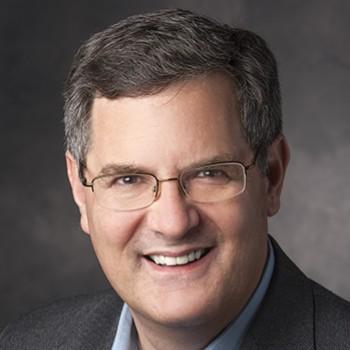
Mark Musen, MD, PhD.
Professor of Medicine, Computational Medicine Research Director, Stanford Division of Computational Medicine
Dr. Musen leads Stanford Division of Computational Medicine and conducts research related to open science, data stewardship, intelligent systems, and biomedical decision support. His group developed Protégé, the world’s most widely used technology for building and managing terminologies and ontologies. He is Principal Investigator of the National Center for Biomedical Ontology, one of the original National Centers for Biomedical Computing created by the U.S. National Institutes of Heath (NIH). He is principal investigator of the Center for Expanded Data Annotation and Retrieval (CEDAR). Dr. Musen has led CEDAR which is a Center of Excellence supported by the NIH Big Data to Knowledge Initiative, with the goal of developing new technology to ease the authoring and management of biomedical experimental metadata. Dr. Musen chaired the Health Informatics and Modeling Topic Advisory Group for the World Health Organization’s revision of the International Classification of Diseases (ICD-11) and he currently directs the WHO Collaborating Center for Classification, Terminology, and Standards at Stanford University.

Mete Ugur Akdogan
Mete received his B.Sc. from Istanbul Technical University, M.Sc. and Ph.D. in Computer Engineering from Dokuz Eylul University, Izmir, Turkey. He worked as a Research Assistant at Dokuz Eylul University and in the Laboratory of Quantitative Imaging at Stanford University before joining the Mussen Lab. His main research subjects are big data analytics, parallel algorithms, biomedical imaging and informatics.

Yan Cao
Yan holds two MS degrees – one in Computer Science from Georgia Institute of Technology and another in Food Science from the University of Minnesota. She joined the Musen Lab as a Software Developer I after graduating from Georgia Tech. Her passion lies in software development for the Bioscience fields, and she had been contributing to the CEDAR project since joining the team and now working on RADx (Rapid Acceleration of Diagnostics for Covid) project.

Michael Dorf
Misha Dorf has been the Chief Software Architect at the Stanford Center for Biomedical Informatics Research for more than 10 years. Misha has an extensive software development background in both industrial and academic environments. He has played the principle role in devising the architecture of the BioPortal and OntoPortal technologies and has extensive experience in Web-based application development with a heavy focus on back-end frameworks and programming languages. He also contributes to RADx (Rapid Acceleration of Diagnostics for Covid) project.v

Attila L. Egyedi
Attila is a full-stack software developer. He received his MS in Computer Science (Machine Learning) from Georgia Tech after his BS from the Technical University of Cluj-Napoca, Romania. He worked at several companies in Romania, Hungary, previously he was part of the CEDAR team for five years. After 1.5 years of AWS experience, he returned to continue the work on CEDAR and other projects of the Musen Lab.

Rafael Goncalves
Rafael Gonçalves is a Senior Research Engineer in the Musen Lab at BMIR. He has a Ph.D. in Computer Science and an M.S. in Software Engineering from The University of Manchester. Rafael first joined BMIR in 2014 as a Senior Software Engineer, and contributed to the Protégé, WebProtégé and CEDAR projects. In 2018 Rafael was appointed to a Research Scientist role, focusing on grantsmanship while contributing to ontology and software development projects, and to the development of enterprise knowledge graphs. In 2021 Rafael moved to the Harvard Medical School, to serve as Associate Director of Knowledge Representation in the new Center for Computational Biomedicine. Rafael returned to BMIR in 2024, to focus on investigating and developing methods and tools to facilitate the discovery, analysis and reuse of biomedical data.

Crystal Han
Crystal is a research data analyst in the Musen Lab working on the RADx project. She holds a bachelor’s degree in Biology from UCLA and master’s degree in Bioinformatics from San Jose State University. Her background includes experience in both bioinformatics and data science, supporting diverse research initiatives.

Josef Hardi
Josef is a senior software developer with over 14 years of experience in software development and data management. His interest in Ontology and Semantic Web Technologies began early in his career, where he contributed to innovative methods linking relational databases with ontologies. This expertise led him to Stanford’s Musen Lab, where he wrote code for Protégé, a widely recognized ontology editor. Since then, Josef has played key roles in projects like CEDAR and FAIRware, enhancing biomedicine metadata management. He is now part of the HuBMAP initiative, developing metadata standards and a data framework for the Human Reference Atlas.

Matthew Horridge
Matthew is a research software engineer in the Musen Lab. He works on the RADx (Rapid Acceleration of Diagnostics for COVID) project, and he also works on other Lab initiatives including the Protégé suite of tools for ontology engineering.

Christian Kindermann
Christian is interested in helping scientist manage their data with semantic technologies (ontologies, knowledge graphs, automated reasoning). He earned a PhD from the University of Manchester, England, where he developed a range of novel pattern-based ontology engineering techniques. He continued his research as a postdoc at the University of Oslo, Norway, before joining the Musen Lab at Stanford as a postdoctoral scholar, where he will apply his techniques in data integration efforts.

Marcos Martínez-Romero
Marcos Martínez-Romero is an experienced Research Software Engineer with a strong background in Knowledge Engineering and Semantic Technology. He earned his B.Sc., M.Sc., and Ph.D. in Computer Science and Artificial Intelligence from the University of A Coruña, Spain. Marcos started his journey with BMIR in 2013 and contributed to various projects, including BioPortal and CEDAR. After serving as an Ontology and Knowledge Engineer at Acubed, Airbus’ Innovation Center in Silicon Valley, Marcos returned to BMIR, currently focusing on the RADx project among other key initiatives.
Martin O'Connor
With over two decades of experience as a research software engineer, Martin O’Connor specializes in constructing tools that facilitate the integration of semantic technologies into software systems. Currently, his primary emphasis lies in enhancing metadata representations by incorporating rich semantic content through the use of ontologies. Martin played a pivotal role in architecting and overseeing the development of CEDAR, a web-based platform designed for the management of metadata related to scientific experiments.

Alex Skrenchuk
Alex is an experienced Linux Systems/DevOps Engineer specializing on High Performance computing, configuration management frameworks, CI/CD pipelines and support of in-house developed web applications.

Jennifer Vendetti
Jennifer is a senior software engineer at the Stanford Center for Biomedical Informatics Research in the Musen Lab. Her focus is developing the BioPortal software for accessing and sharing biomedical ontologies. She additionally holds the role of the primary Stanford representative within the OntoPortal Alliance, an international consortium comprised of research teams dedicated to promoting and collaboratively advancing the OntoPortal open-source software.

Bo Xiong
Bo is a postdoctoral scholar, working with Prof. Mark Musen at the Center for Biomedical Informatics Research. He earned his PhD in Computer Science from the University of Stuttgart, Germany, and the international Max Planck Research School for Intelligent Systems (IMPRS-IS). During his PhD, he focused on AI and machine learning, with a particular emphasis on advancing the representation of human knowledge.