
News & Announcements
Featured News
from the Division
Division Chief Dr. Mark Musen awarded $20 Million for National AI-Enabled Cloud Laboratory Network
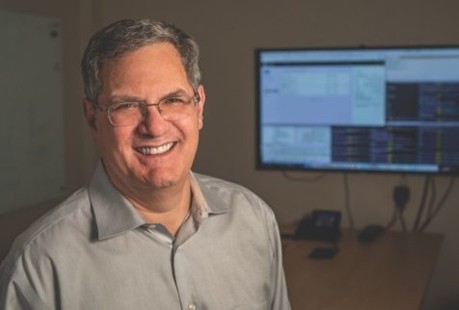
Stanford researchers have received $20 million as part of a new $400 million national initiative to build a network of AI-enabled, remotely operated laboratories. Led at Stanford by Mark Musen (pictured), the four-year project brings together collaborators from Purdue University, Morehouse College, and Emerald Cloud Lab to advance automated scientific experimentation. The Stanford team will also develop shared standards that will allow researchers to exchange cloud-lab specifications across the broader network of 20 awardees. The initiative is a core National Science Foundation contribution to the federal Genesis Mission, which seeks to harness AI to accelerate scientific discovery.
Division & Research News
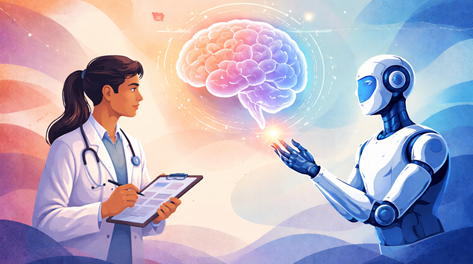
From AI Tool to Clinical Teammate
A new study led by Selin Everett, with senior authors Jonathan Chen & Eric Horvitz, explores how rethinking human-AI collaboration can improve clinical decision-making. Published in Nature Digital Medicine, the multicenter randomized controlled trial found that when physicians and AI reason independently and then combine their perspectives, diagnostic accuracy significantly improves.
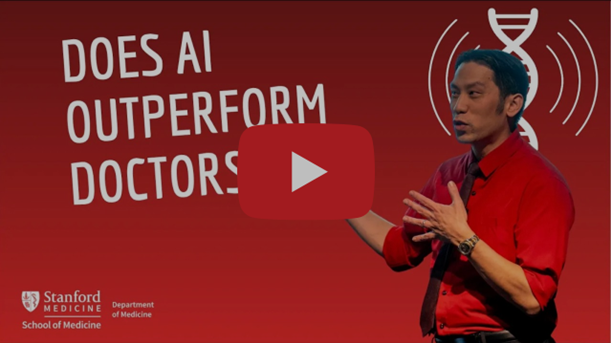
Jonathan Chen on AI in Medicine: Promise, Pitfalls, and Practice
Jonathan Chen, MD, PhD, clinician, AI researcher, and Associate Professor at Stanford, whose work focuses on combining human and artificial intelligence to improve clinical decision-making. Dr. Chen reflects on the rapid rise of AI in medicine, and the moment he realized everything had changed. He also walks through surprising findings from his research, including studies showing that AI alone can sometimes outperform doctors using AI tools.
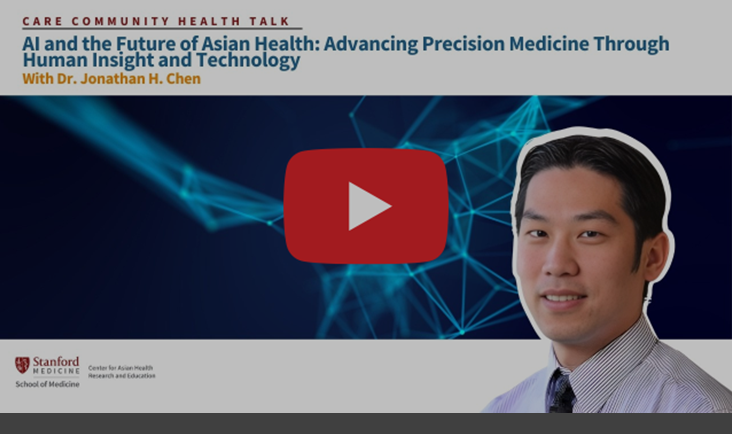
AI and the Future of Asian Health: Advancing Precision Medicine Through Human Insight and Technology
In this kickoff session, Dr. Jonathan H. Chen examines how human expertise and AI work together to improve diagnosis, prevention, and treatment—particularly in tackling health disparities, cultural nuances, and underrepresentation in data that impact Asian communities. He also emphasizes the importance of preserving empathy and human understanding at the core of patient care. Drawing on his experience as both a physician and biomedical informatics scientist, Dr. Chen shares how AI is making healthcare more efficient, personalized, and data-driven.
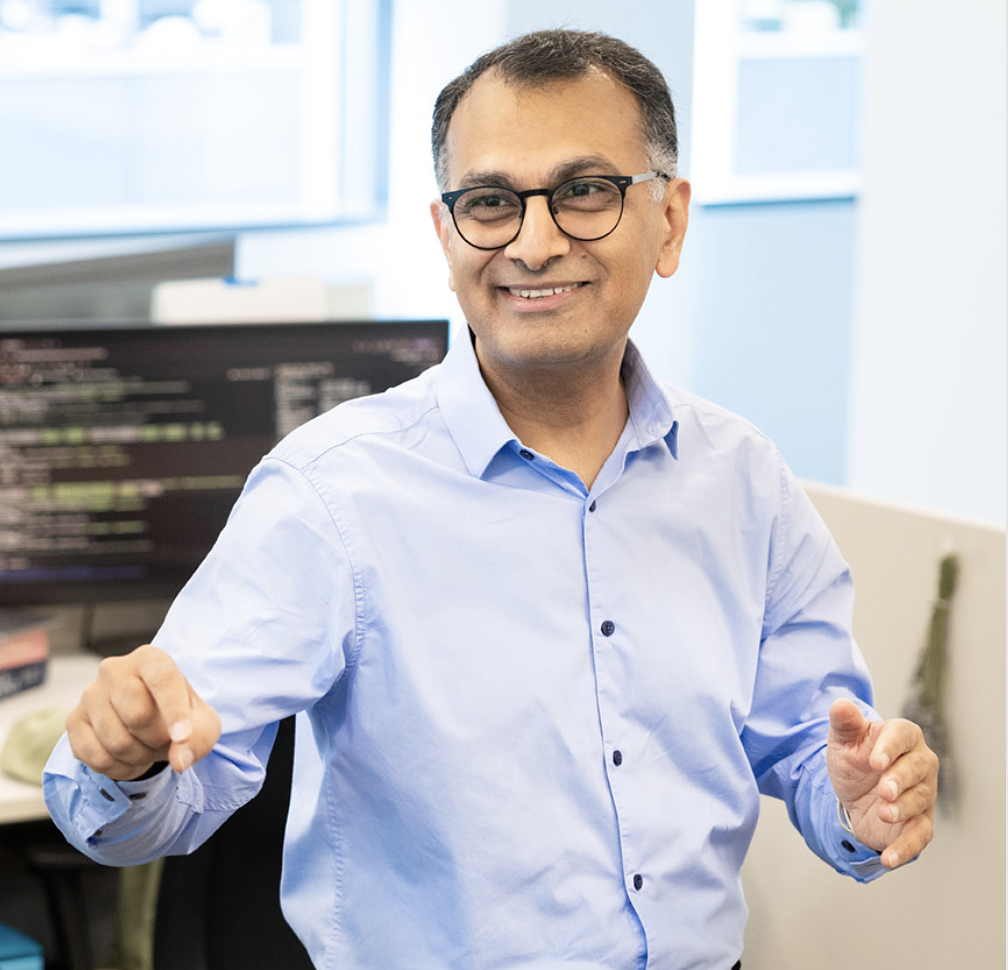
How a Winding Path Led to a Life-Saving Test
From uncertainty to impact, Purvesh Khatri’s career path was anything but straight. In this episode, he shares how curiosity and a willingness to pivot led to a breakthrough blood test that helps doctors make faster, life-saving decisions for sepsis.
Turning AI Promise into Real-World Practice
In conference rooms and clinics across the country, leaders are asking the same question: How do we move from excitement about artificial intelligence to systems that actually work — safely, responsibly, and at scale? At the Stanford Division of Computational Medicine, a new program aims to answer that question.
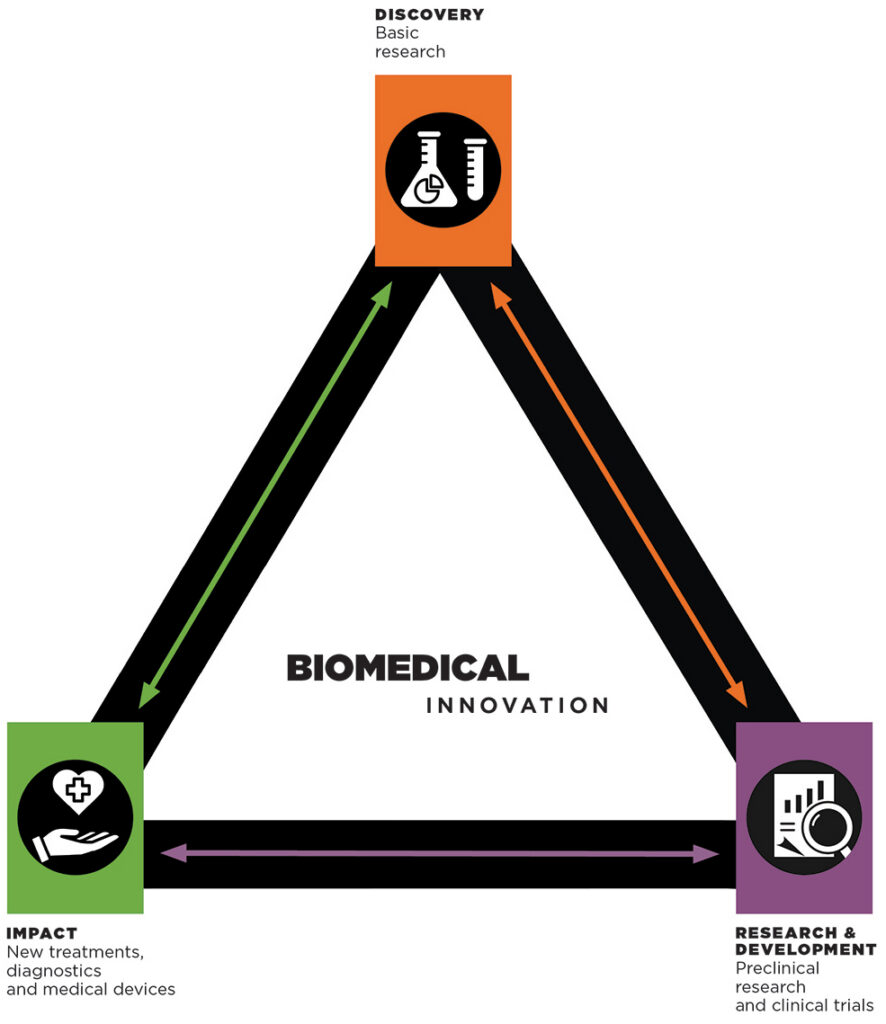
The Power of Research: How Discoveries Translate into Better Health
The latest issue of Stanford Medicine Magazine explores how discoveries move from the lab to lasting impact in patient care. We’re proud to share that several members of our DoM community are featured in this issue, including Alan Pao, Purvesh Khatri, Victoria Parikh, Crystal Mackall, Seung Kim, and more.
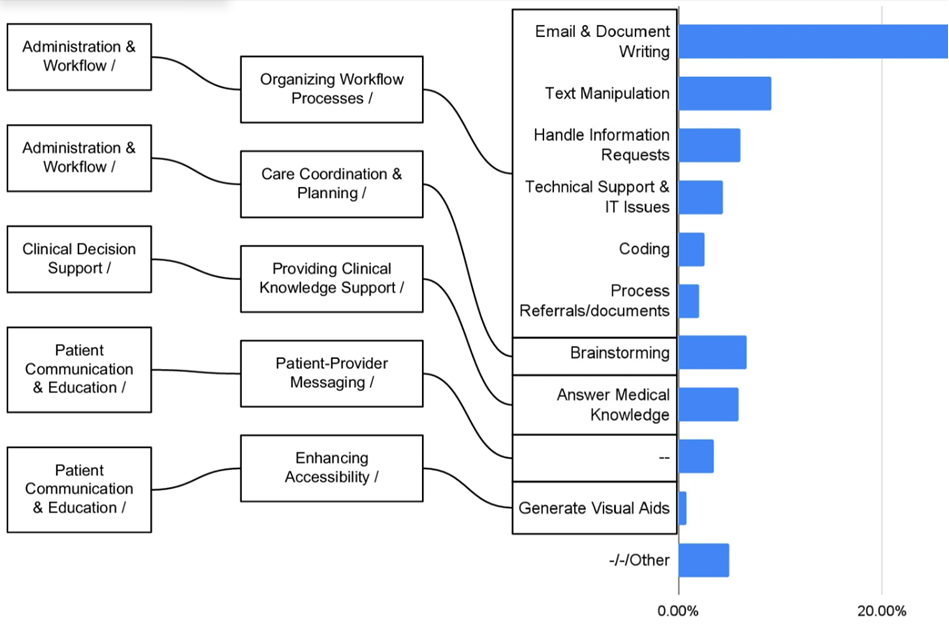
Uses of Generative AI by Non-Clinician Staff at an Academic Medical Center
A new study in npj Health Systems authored by Kameron Black, Stephen Ma, Hanna Kiani, Aditya Bhasin, Jonathan Chen, Nigam Shah, & colleagues, examines how non-clinician staff are using generative AI tools in real-world healthcare settings.
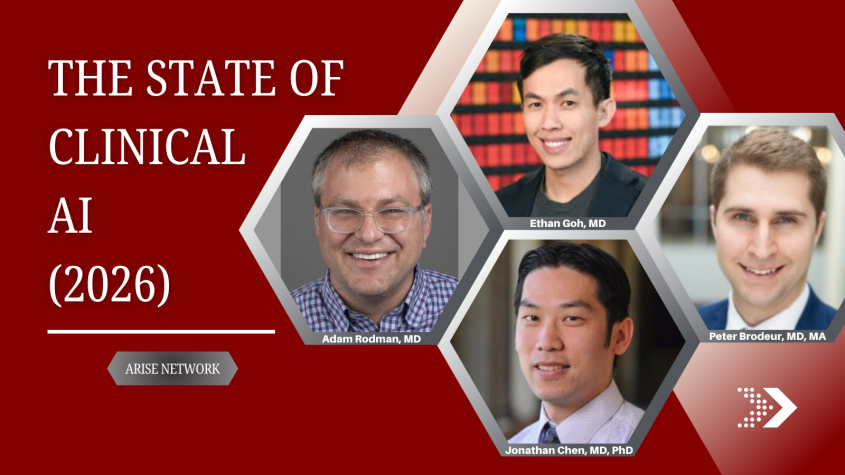
State of Clinical AI 2026: Inaugural Report Highlights Most Significant Developments and Challenges
The Stanford-Harvard AI Research and Science Evaluation (ARISE) network produced a comprehensive guide to help clinicians and decision-makers who are inundated with AI offerings. The report is presented as an easy-to-digest slide deck synthesizing the most impactful clinical AI research over the past year. Click to read the full report.

Biological data governance in an age of AI
As biological AI and general-purpose reasoning systems advance, the community faces balancing scientific progress with misuse risks. A new study by Tina Hernandez-Boussard, Russ Altman, & colleagues recommends narrow access controls on select high-risk pathogen data, while maintaining open access for most scientific data.
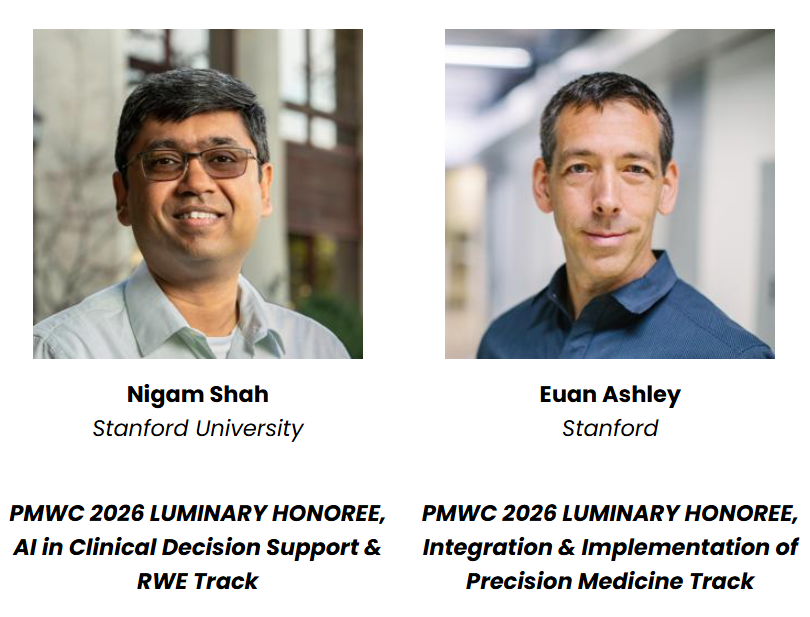
Euan Ashley and Nigam Shah Honored at PMWC 2026
Euan Ashley and Nigam Shah Honored at PMWC 2026
Euan Ashley and Nigam Shah have been named 2026 Luminary Award honorees by the Precision Medicine World Conference (PMWC). Euan is being honored for his work integrating precision medicine into clinical care, while Nigam is being recognized in the AI in Clinical Decision Support & Real-World Evidence track for advancing data-driven approaches that translate innovation into patient impact. Congrats to both on this well-deserved recognition!
Click the Image to read more.
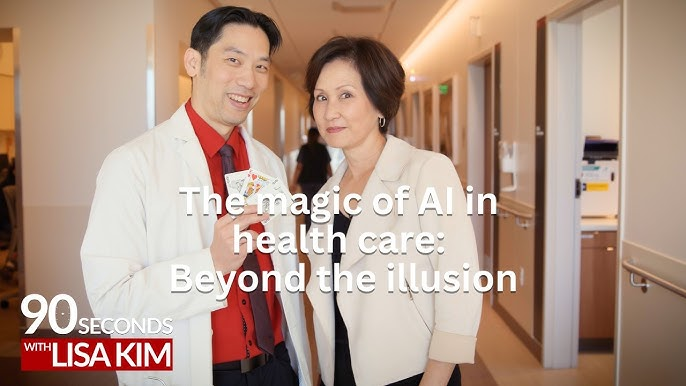
The magic of AI in health care: Beyond the illusion | 90 Seconds w/ Lisa Kim
Jonathan Chen, MD, PhD, director of AI in medical education at Stanford Medicine, has a few tricks up his sleeve when it comes to explaining how AI is reshaping medicine and patient care. Cutting through the smoke and mirrors, Chen separates anxiety from optimism around the hype — as this “hospital magician” takes his show on the road.
Click the image to see the full interview!
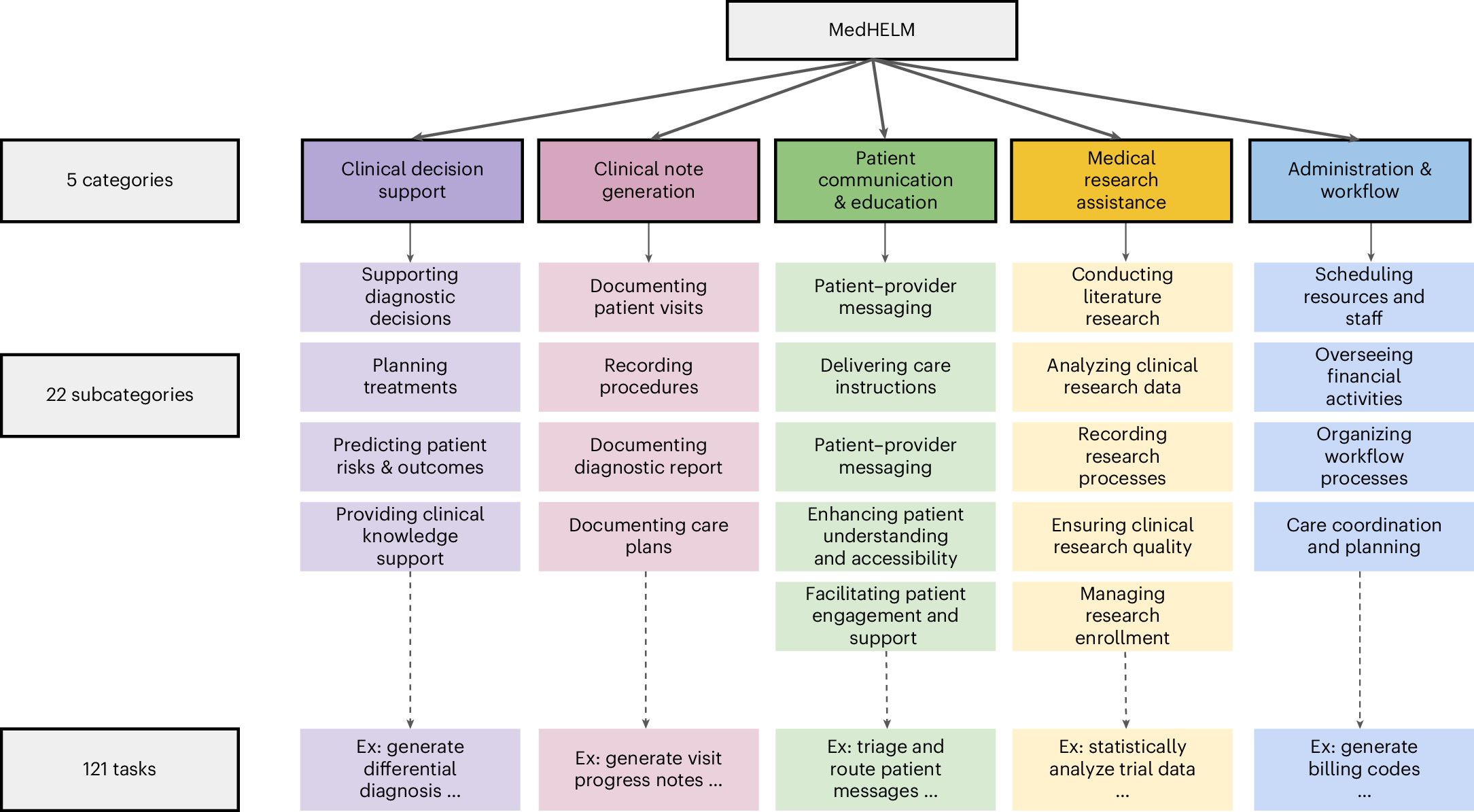
Holistic Evaluation of Large Language Models for Medical Tasks with MedHELM
A large, Stanford-led team, senior-authored by Nigam Shah, introduces MedHELM — an open, task-based framework for evaluating medical LLMs on realistic clinical work, not just exam-style benchmarks.
Click the image to read the full paper!
Computational Medicine Summarizes 10 Years of CEDAR Achievements
A new article synthesizes a decade of work on CEDAR Workbench. Results show that successful deployment of CEDAR stems from encoding metadata standards as reusable knowledge bases. FAIR data depends on communication of metadata standards for use with semantic technology. Click image to learn more!
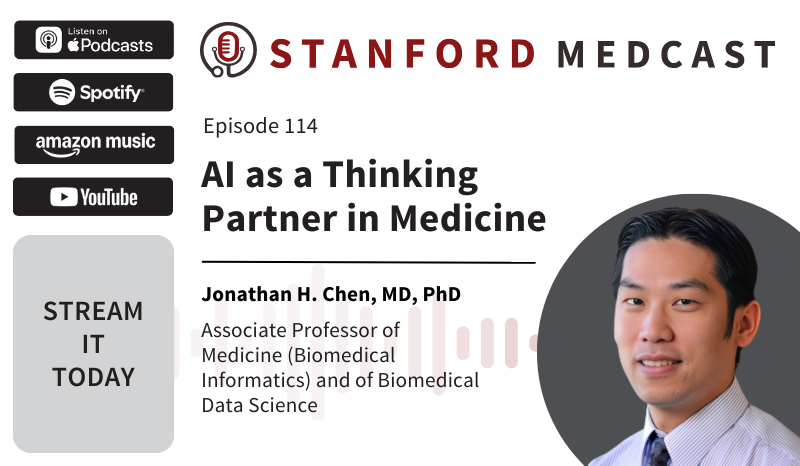
New Stanford Medcast With Jonathan Chen: AI as a Thinking Partner in Medicine
AI isn’t about replacing clinicians — it’s about augmenting judgment in an increasingly complex healthcare system. In this episode, Jonathan Chen explores how AI can support clinical reasoning, education, and patient care, while also surfacing deeper issues around incentives, trust, and equity.
(Click image for podcast)
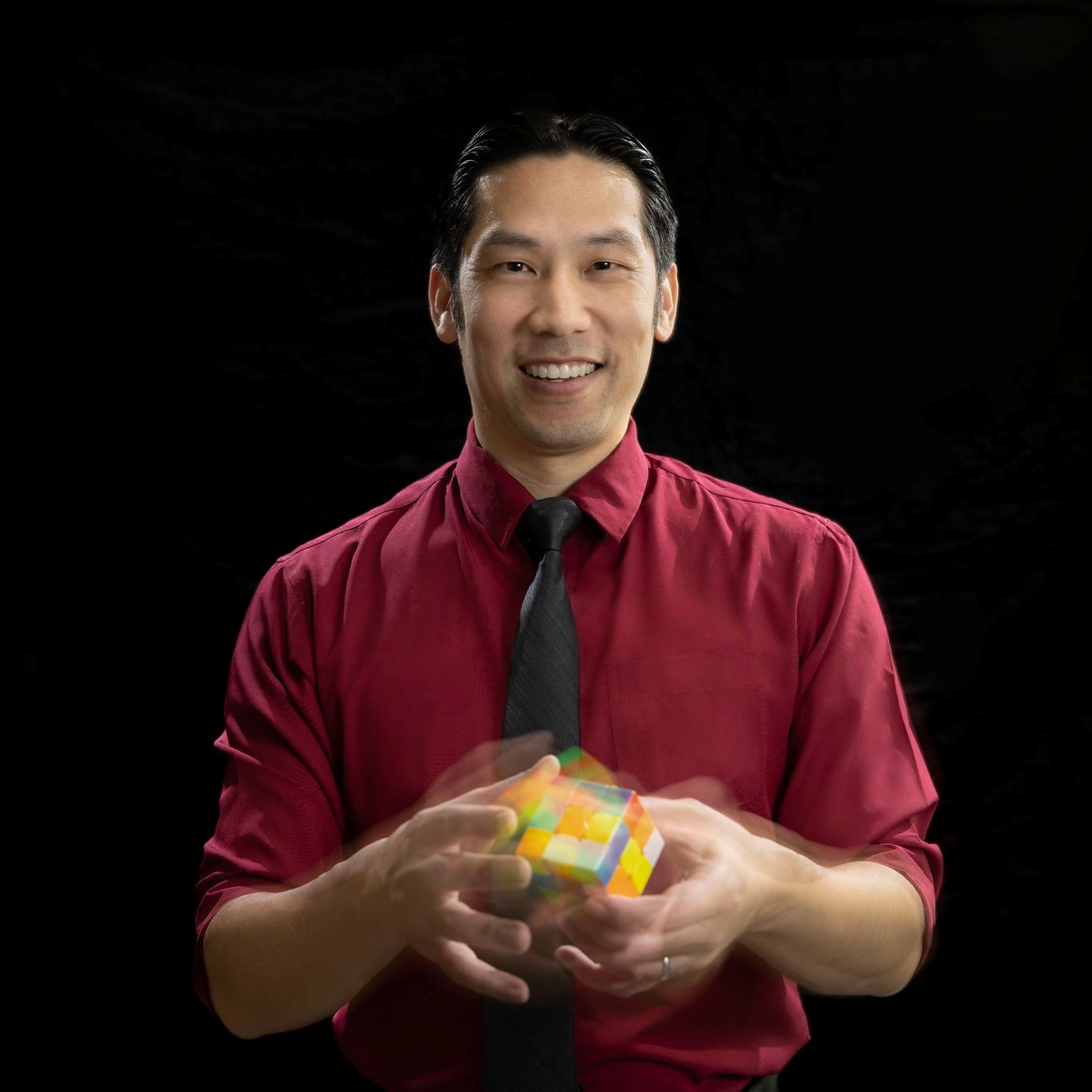
Medicine Grand Rounds: AI and Magic
Jonathan Chen, MD, PhD, is a biomedical informaticist who leads a research group applying human + AI approaches to clinical data to improve patient care, and a magician.
(Click image for recording)