
News & Announcements
Featured News
from the Division
Division Chief Dr. Mark Musen awarded $20 Million for National AI-Enabled Cloud Laboratory Network
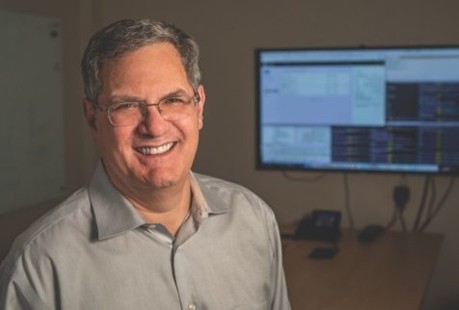
Stanford researchers have received $20 million as part of a new $400 million national initiative to build a network of AI-enabled, remotely operated laboratories. Led at Stanford by Mark Musen (pictured), the four-year project brings together collaborators from Purdue University, Morehouse College, and Emerald Cloud Lab to advance automated scientific experimentation. The Stanford team will also develop shared standards that will allow researchers to exchange cloud-lab specifications across the broader network of 20 awardees. The initiative is a core National Science Foundation contribution to the federal Genesis Mission, which seeks to harness AI to accelerate scientific discovery.
Division & Research News
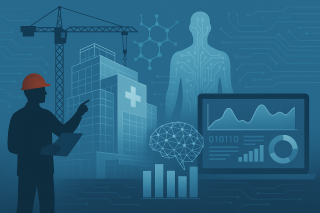
Constructing the Future of Health; Stanford’s Division of Computational Medicine
For nearly forty years, Stanford’s Division of Biomedical Informatics Research (BMIR) has quietly shaped the way medicine understands data. Its faculty have built the frameworks that let clinicians ask sharper questions, the algorithms that make sense of millions of medical records, and the systems that help translate discovery into practice. But as their work has expanded — from building databases to designing AI models that guide clinical care, the name Biomedical Informatics Research no longer feels large enough to hold it.
That evolution has now been captured in a new name: Computational Medicine, with a mission embodied in its tagline: Constructing the Future of Health with Data-Driven Tools.
Mark Musen Named Distinguished Fellow of the American College of Medical Informatics
We’re proud to share that Mark A. Musen, MD, PhD, FACMI has been elected as a Distinguished Fellow of the American College of Medical Informatics (ACMI) in the 2025 class of Fellows. The ACMI Distinguished Fellow designation is one of the highest honors in biomedical and health informatics, recognizing individuals whose sustained leadership and scholarly contributions have significantly advanced the field. Dr. Musen has been formally inducted alongside his colleagues at the 2025 AMIA Annual Symposium in November.
A New, Faster Test for Sepsis
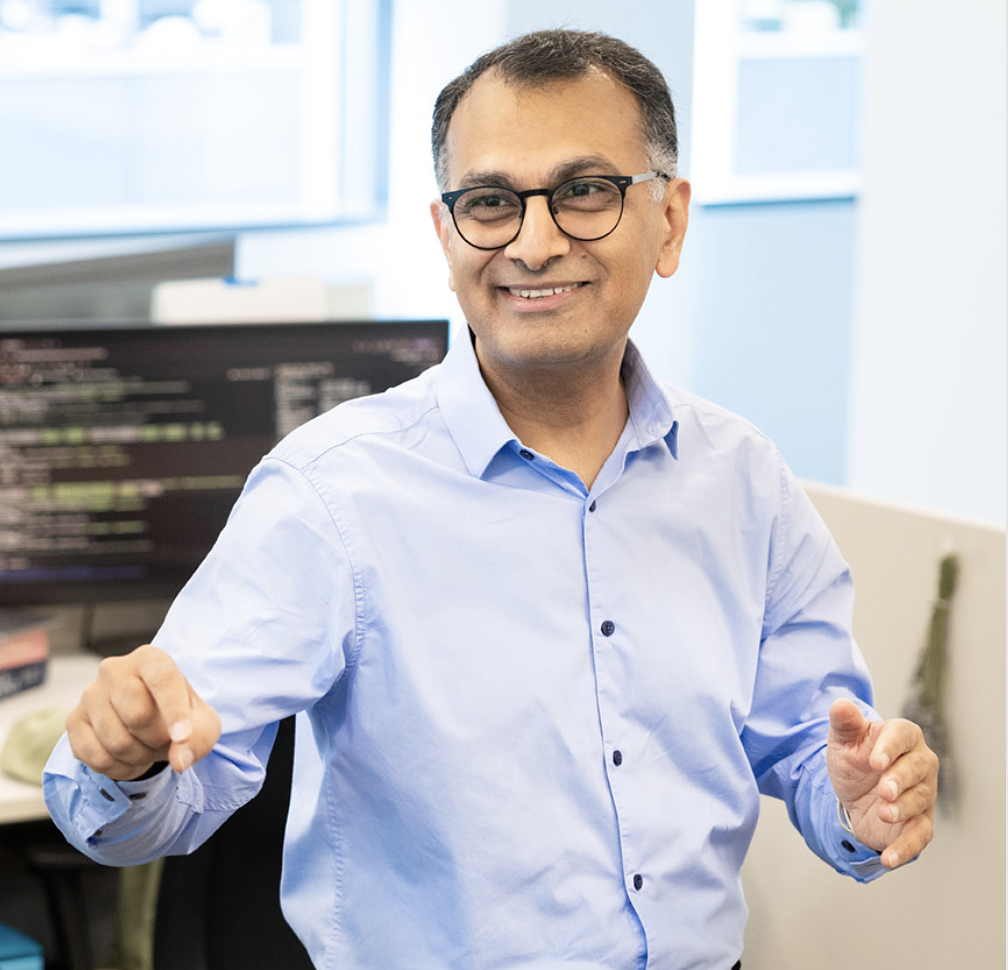
When a patient shows signs of sepsis, minutes matter. But treating every case the same can lead to overtreatment or deadly delays. Division faculty Purvesh Khatri, PhD, and his team have developed a rapid blood test that helps clinicians make faster, more precise calls.
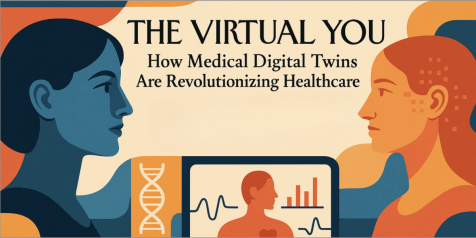
Medical Digital Twins
Explore how medical digital twins — AI-powered virtual patient models — are transforming healthcare with personalized care, prediction, and prevention. Featuring Computational Medicine faculty Dr. Olivier Gevaert and Dr. Tina Hernandez-Boussard!
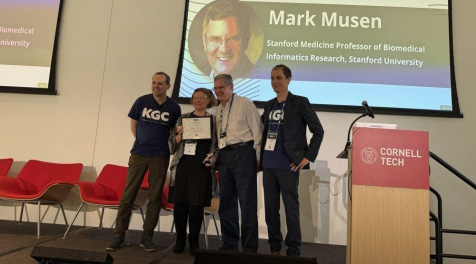
KGC 2025 Lifetime Achievement Awarded to Dr. Mark Musen
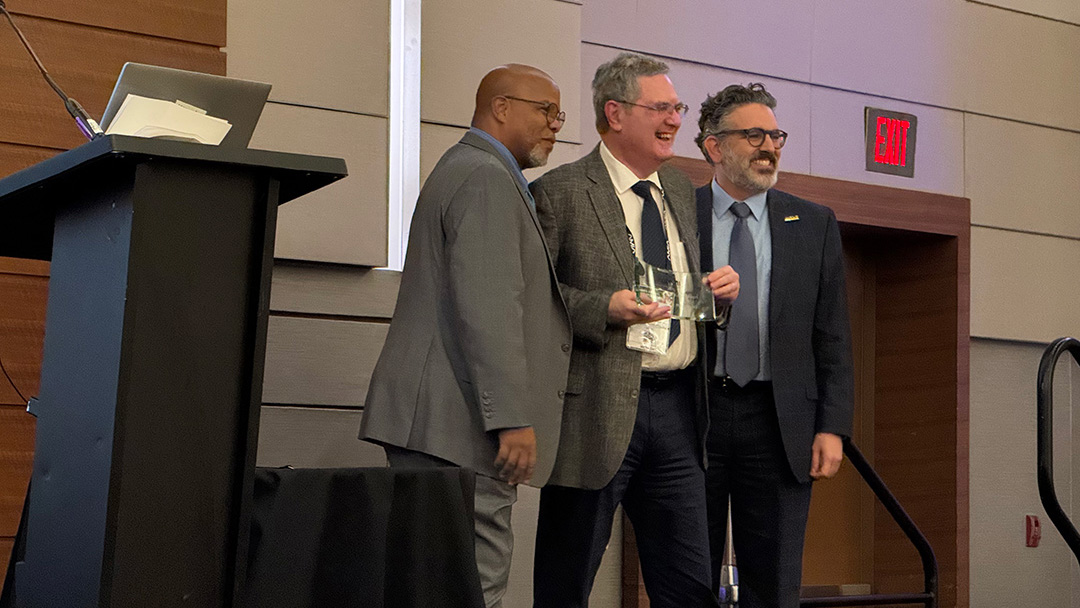
Division Chief Dr. Mark Musen received the Knowledge Graph Conference 2025 Lifetime Achievement Award in New York for outstanding contributions to the field of knowledge engineering (pictured receiving the award from Prof. Deborah McGuiness of Rensselaer Polytechnic Institute. Congratulations to the Division Chief.

Holistic Evaluation of Large Language Models for Medical Applications
Medical and AI experts build a benchmark for evaluation of LLMs grounded in real-world healthcare needs. The effort features contributions from Computational Medicine faculty Dr. Jonathan Chen and Dr. Nigam Shah and their labs.
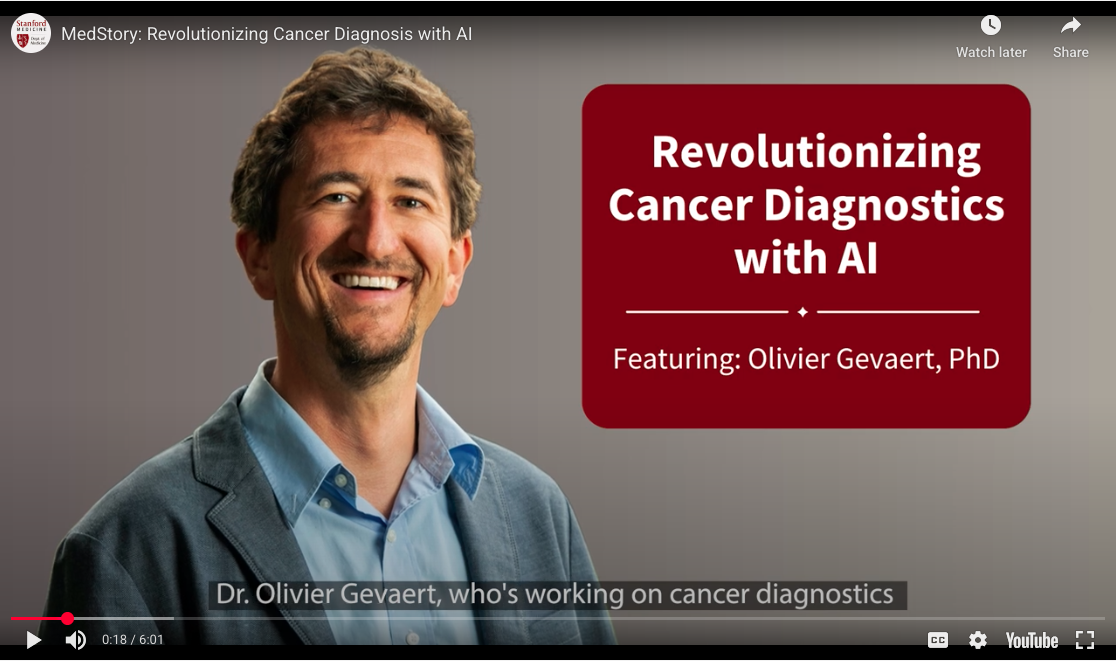
Revolutionizing Cancer Diagnosis with SEQUOIA
In this episode, host Rebecca Handler sits down with Computational Medicine faculty member Olivier Gevaert, PhD, to discuss SEQUOIA, a groundbreaking AI tool with the potential to cut costs, save time, and improve health outcomes for cancer patients.
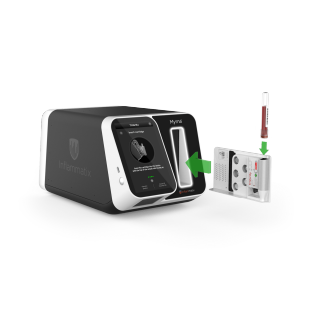
FDA Clearance for TriVerity
Computational Medicine faculty member Dr. Purvesh Khatri and his team, in collaborator Dr. Tim Sweeney successfully got FDA clearance for TriVerity after years of work. TriVerity is a blood based test based on signatures for presence, type, and severity of infection that enables translation from computation analysis to clinical care.
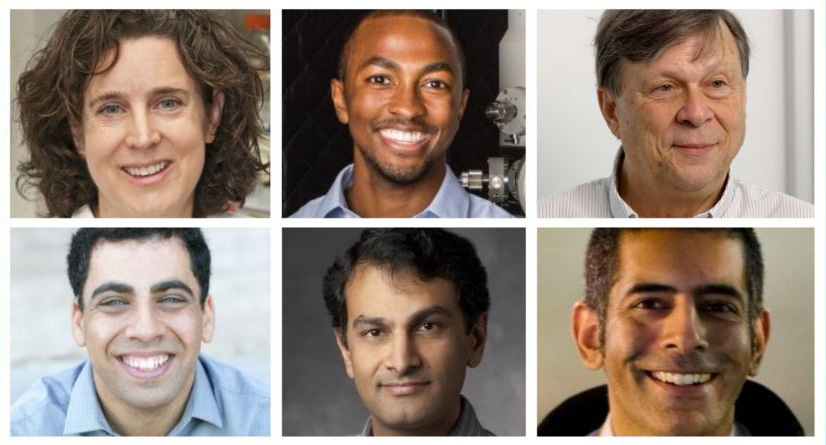
Center for Human Systems Immunology Receives $18.6 Million for Global Immunology Challenges
The Stanford Center for Human Systems Immunology has received a total of $18.6 million in grants from the Bill & Melinda Gates Foundation to tackle some of the world’s biggest infectious disease challenges. Computational Medicine faculty Dr. Purvesh Khatri receives $1.8 million over the next 3 years to build foundational models for human immunology.